by Megan Hathaway Scrivens
I think we can all recall the Torch Relay in Olympic ceremonies, where the flame is passed from one person to the next, and the next, and so on. What most people don’t know is that the flame symbolizes the light of spirit, knowledge, and life. The “passing of the torch” represents the passing of this fire from generation to generation (The Washington Post, 1996). In that sense, I think that the “passing of the torch” is reproduced in women’s political leadership.
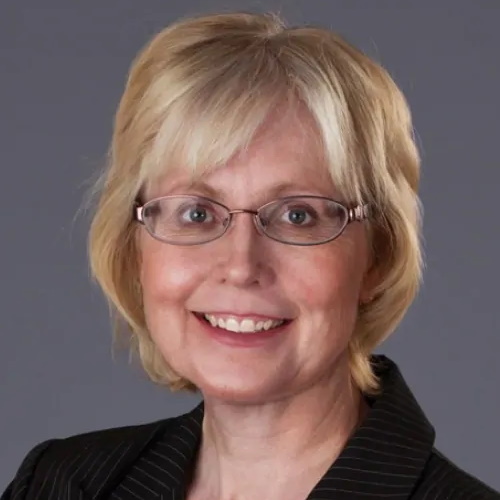
My recent experiences with women’s leadership have been under the mentorship of London-West MPP Peggy Sattler. As a political leader, Sattler has demonstrated her capacity to pick apart provincial legislation and promote new policies with the backing of knowledge, but what she has taught me is even more impactful.
Women’s leadership is transformational – it is the embodiment of community, collaboration, and empowerment. It derives its life from inspiring other women and sharing leadership among networks. I asked Sattler to give me five words to describe women’s leadership from her perspective, to which she chose the words strong, caring, collaborative, empathetic, effective. While I think all of these words are accurate to describe women’s leadership, for the sake of this article I will be focusing on three: strong, collaborative, and effective.
For London-West MPP Peggy Sattler, women’s leadership in the context of political leadership is an ongoing process of women leading in a way that empowers other women. Transformational leadership highlights the relational nature of leadership, emphasizing the requirements of a leader to exercise empathy and empowerment (O’Brien & Shea, 2010, p. 3). Sattler recalls her experiences when entering her career, recognizing that her involvement in politics came about because of women political leaders.
The MPP recounts her experience working on her first campaign with Marion Dewar in the Canadian federal election of 1987. After the successful campaign and Dewar’s victory, Sattler was offered a job in her office on parliament hill. She then moved to work for Marilyn Churley as a cabinet minister when the NDP formed government in Ontario in 1990. With her foot in the door at the provincial level, she then became active with Marion Boyd, becoming involved in her riding association in London. She quotes her work with these foundational figures as giving her “the support, momentum, and role modeling that I needed to move forward in that career myself.” These women are where she derives her belief that part of the role of a woman leader is to encourage and carve out pathways for other women to move into leadership roles.
Similarly, Sattler has devoted much of her energy as a woman political leader into creating opportunities for young women. She organizes programs such as Girls Government, Youth Council, and Leading Women Leading Girls to introduce ways of getting involved politically and provide an understanding of the importance of political engagement. For Sattler, this is what makes her role as a leader worthwhile.
In my experiences with the MPP, I have learned that she is always the first to support women in running for office at all levels of government. In the most recent municipal election, Sattler endorsed strong female candidates and jumped on the canvassing trails to show her support. This kind of support and empowerment is vital in women’s leadership as it promotes the success of future women leaders.
In empowering one another, women’s leadership often revolves around the construction of communities and networks. Within these networks, women leaders support one another and collaborate in a form of shared leadership, taking a collective approach to resolving complex issues. Shared power leadership encompasses many of the same elements of transformational leadership, directing its focus on political views of leadership (O’Brien & Shea, 2010, p. 5). The transformational approach focuses on relationship-oriented behaviours, which implies community-building and collaboration.
When asked about her experiences with shared leadership, Sattler reflects that women leaders, such as herself, are more likely to introduce an issue and try to take in everyone’s views. She considers the multiple perspectives at the table and attempts to find a resolution that reflects the contributions of the collective.
In working with the MPP, she has always valued the power of unification. Sattler works closely with the two other NDP MPPs in London, Terence Kernaghan and Teresa Armstrong, to collaborate in addressing issues of importance to the London community. Furthermore, Sattler makes an extensive effort to connect and hear from her constituents, from hosting public forums on pertinent social issues, to always showing up at demonstrations and community events. When interacting with community members, Sattler always asks for them to share their stake in the issue and to elaborate with their personal experiences. She fosters a relationship where she aims to learn from her constituents, just as much as they learn from her.
Crosby and Bryson lay out a framework for building advocacy coalitions and framing issues in a way that satisfied an array of stakeholders. Therefore, to be effective, shared leadership requires this creation of networks of people who are empowered to engage in processes of self-reflection and participation (O’Brien & Shea, 2010, p. 5). These communities are then mobilized by strong women leaders to confront complex issues with a unified front, but still representing varying perspectives.
Sattler recognizes the power of collaborative leadership styles in pushing for change. In reflecting on her biggest accomplishments, she attributes much of the success to the supportive networks she built on the issue. When Sattler passed her private member’s bill to reform the Employment Standards Act to provide paid leave for employees who have experienced domestic violence or sexual violence, she collaborated with many other women leaders to collectively put pressure on the government. Sattler states “It was the collaboration of all of those different sectors, with somebody in elected office that was able to push that issue forward. SO you need leaders in all of these different areas, and it’s the collaboration that can really make change.”
My experiences with Sattler as my mentor has been transformational in my leadership journey. From learning the importance of community-involvement and female empowerment, to recognizing the power in collaborative leadership techniques. Sattler has effectively contributed to the relay, passing the torch around her team of networks, and creating opportunities for future generations to join the race. From a political science student’s perspective, I am grateful for women leaders like Sattler who have inspired this transformational approach.
From a spark to a flame…
References
O’Brien, Erin and Jennifer Shea. “Women’s Leadership Within Their Communities” in Gender and Women’s Leadership: A Reference Handbook, 41-49. Edited by Karen O’Conner. Thousand Oaks: Routledge, 2010.
Newman, Jacquetta. “This is Where I do my work: Women’s Identity at the Municipal Level: A very provisional draft.” Paper presented at the Annual Meeting of the Canadian Political Science Association. May 30, 2022.
“The History of Olympic Torch Relays.” The Washington Post. WP Company, 1996. https://www.washingtonpost.com/wp-srv/sports/olympics/longterm/torches/history.htm.
 Women and Gender In Civic Leadership
Leave a comment